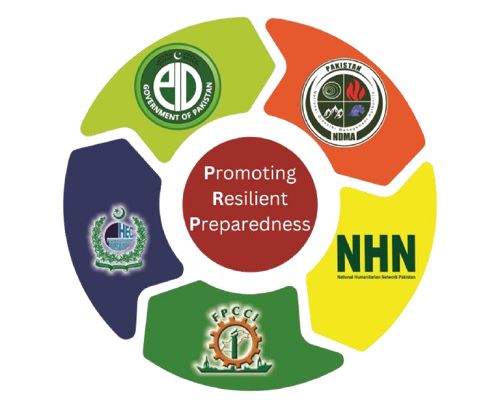
The Pakistan Resilience Partnership (PRP) is a national initiative established in 2018 to strengthen Pakistan's ability to prepare for, respond to, and recover from disasters. PRP brings together government agencies, local humanitarian organizations, civil society, academia, media, and the private sector to build a more coordinated and resilient humanitarian system. Its core objectives include improving collaboration among humanitarian actors, enhancing the capacity of local responders through training and knowledge sharing, and supporting the development of disaster management policies at provincial and district levels. PRP also works closely with the private sector to promote business continuity planning and engages directly with communities to support locally led emergency and recovery efforts. Through these efforts, PRP is committed to building a safer, more resilient Pakistan for all.

Our Vision, Mission & Strategic Objectives

Vision

Resilient communities, built through empowered, inclusive, and anticipatory partnerships, leveraging risk financing and insurance, leading transformative adaptation to climate and humanitarian challenges for a safer, sustainable future.

Mission

To bridge local action and systemic resilience by empowering communities, fostering inclusive partnerships, and promoting innovative, anticipatory, and financially sustainable approaches through risk financing and insurance.

Strategic Objectives


1. Advance Resilient Partnerships: Strengthen and expand climate and humanitarian resilience partnerships by fostering inclusive collaboration among local actors, government, private sector, civil society, academia, and media prioritizing community led, equitable, and anticipatory solutions that build adaptive capacities and promote innovative, localized responses to climate and humanitarian risks.

2. Establish and Strengthen a ‘Network of Networks’: Connect diverse local, national, and regional organizations into a cohesive platform that enables knowledge-sharing, coordinated action, and collective advocacy for resilient preparedness.

3. Enhance Risk Insurance and Financing Mechanisms: Facilitate access to innovative risk transfer and financing solutions tailored to local contexts, ensuring that vulnerable communities are financially protected and can recover swiftly from climate and disaster shocks.