Resilient communities, built through empowered, inclusive, and anticipatory partnerships, leveraging risk financing and insurance, leading transformative adaptation to climate and humanitarian challenges for a safer, sustainable future.
International Day for Disaster Risk Reduction 2025: Fund Resilience, Not Disasters
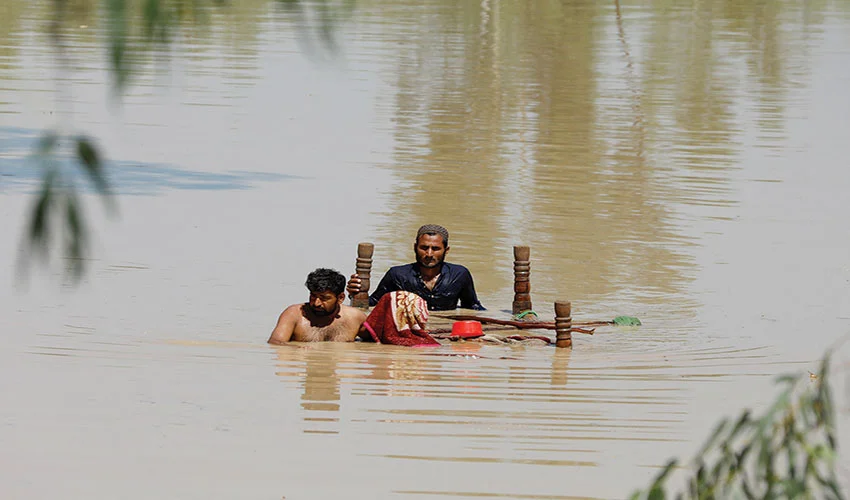
The International Day for Disaster Risk Reduction (IDDRR) 2025 calls on all nations, institutions, and communities to prioritize investments in resilience as the most effective pathway to sustainable development. Disasters are not merely natural events, they are the consequence of unaddressed risks and vulnerabilities. By financing resilience today, we can avert human and economic losses tomorrow, ensuring safer, more inclusive, and more sustainable societies.
In Pakistan, resilience financing is essential to protect lives and livelihoods, safeguard infrastructure, and reduce the burden of recurrent losses. Prioritizing early warning systems, sustainable land-use planning, risk informed health and education services, and climate adaptation is not only a matter of cost efficiency but a moral and developmental obligation.
PRP is committed to:
Advocate for resilience financing as a cornerstone of sustainable development.
Support local and provincial preparedness systems that place communities at the center of resilience.
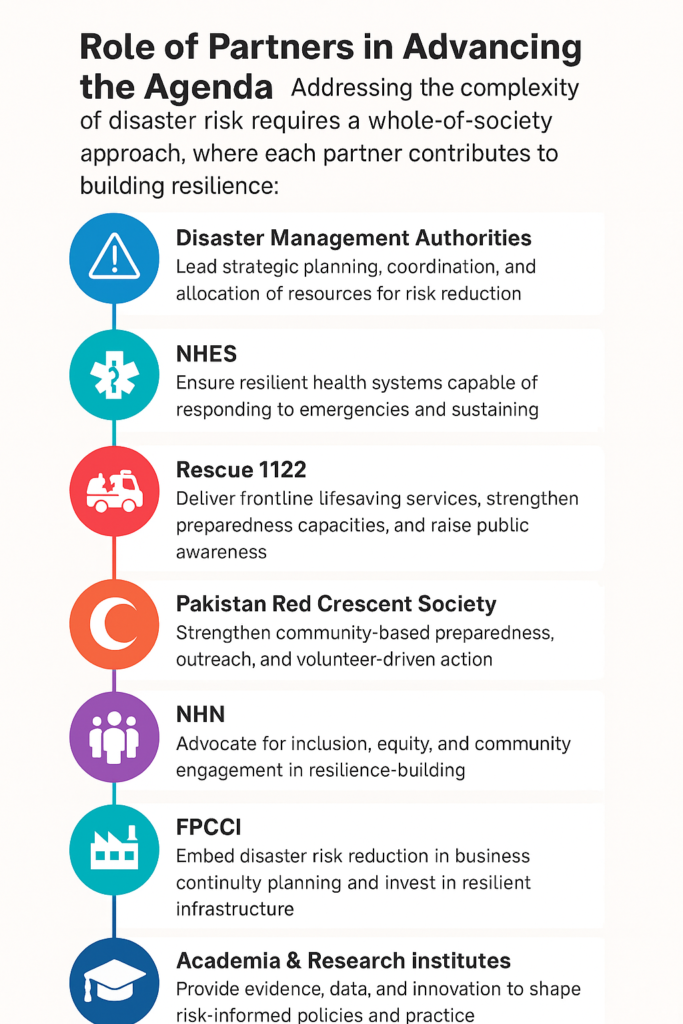
Facilitate multi-stakeholder partnerships “Network of Networks” to ensure coherence between government, civil society, private sector, academia, and media in advancing resilience.
Promote risk-informed development planning that integrates disaster risk reduction, climate adaptation, and sustainability principles.
PRP stands in solidarity with national and international partners in advancing the call to Fund Resilience, Not Disasters, ensuring that resources are invested in building safer communities, protecting development gains, and securing the future for generations to come.
Mindful Minute
Those who pay for climate change
Descending from an 8,611-metres peak at the majestic K2 to the tidal mudflats of the Arabian Sea, Pakistan’s landscape encompasses a range of climatic zones over a straight-line distance of about 1,550 kilometres. This fascinating topography hosts diverse ecosystems comprising snow-packed mountain peaks, forests, plateaus, hills, deserts, sprawling plains, mighty rivers, hill torrents, islands and coastline. This tapestry of nature is prone to numerous vulnerabilities aggravated by climate change. Millions of under-served dwellers in these diverse ecosystems become more vulnerable with every climate shock. Glacial lake outburst floods (GLOFs), mudslides, landslides, avalanches, flash floods, cloudbursts, riverine deluges, droughts, heatwaves, forest fires, soil erosion are some of the manifestations of climate change.
Descending from an 8,611-metres peak at the majestic K2 to the tidal mudflats of the Arabian Sea, Pakistan’s landscape encompasses a range of climatic zones over a straight-line distance of about 1,550 kilometres. This fascinating topography hosts diverse ecosystems comprising snow-packed mountain peaks, forests, plateaus, hills, deserts, sprawling plains, mighty rivers, hill torrents, islands and coastline. This tapestry of nature is prone to numerous vulnerabilities aggravated by climate change. Millions of under-served dwellers in these diverse ecosystems become more vulnerable with every climate shock. Glacial lake outburst floods (GLOFs), mudslides, landslides, avalanches, flash floods, cloudbursts, riverine deluges, droughts, heatwaves, forest fires, soil erosion are some of the manifestations of climate change.
Having the unique edge of a well-established partners’ platform, the Pakistan Resilience Partnership (PRP) is taking a decisive step to establish a ‘Network of Networks’. This initiative aims to bring together diverse stakeholders from government, civil society, private sector, academia, media, and international development partners under a unified resilience agenda. The effort is aligned with global commitments under the Sendai Framework, the Sustainable Development Goals (SDGs), and the Paris Agreement, while strongly anchoring the localization agenda to ensure that communities are at the center of resilience-building.
Objectives
Institutionalize PRP as the coordination hub for resilience-related networks.
Standardize resilience indicators and frameworks across thematic networks.
Strengthen knowledge-sharing and digital platforms for localization of best practices.
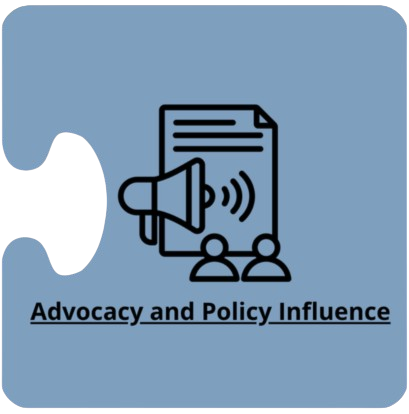
Leverage collective advocacy to influence national and provincial resilience policies.
Facilitate joint programming and resource mobilization across networks.
Framework
Strategic Area
Indicators
Action Plan
Expected Outcomes
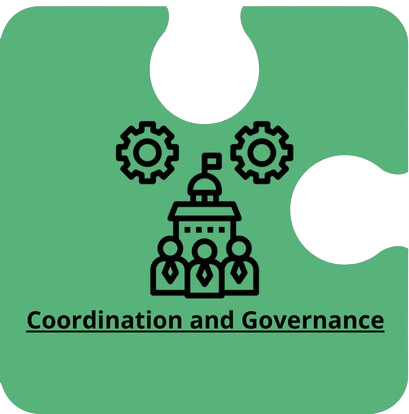
Coordination & Governance
Number of networks formally linked, MoUs signed, frequency of coordination meetings
Map and profile networks, establish Coordination through PRP Secretariat, convene launch roundtable
PRP recognized as coordination hub with strengthened institutional legitimacy