The National Disaster Management Authority (NDMA) is Pakistan’s apex federal body responsible for overseeing, coordinating, and implementing disaster management activities nationwide. It was established on 17 August 2007 through the National Disaster Management Ordinance 2006, and later formalized under the NDMA Act 2010. NDMA operates under the administrative control of the Prime Minister’s Office and serves as the executive arm of the National Disaster Management Commission (NDMC), chaired by the Prime Minister.
Formation Context:
NDMA was created in response to Pakistan’s urgent need for a centralized disaster management system after catastrophic events like the 2005 earthquake and recurring floods. It was envisioned as a dedicated institution to enhance disaster risk management, response coordination, and resilience building nationwide.
Primary Roles and Responsibilities:
Key Functions:
At the provincial and regional levels, the Provincial Disaster Management Authorities (PDMAs) and Gilgit-Baltistan Disaster Management Authority (GBDMA) work under NDMA’s framework to implement disaster policies, manage local emergencies, and build disaster resilience:
Authority | Full Name | Coverage |
Provincial Disaster Management Authority Punjab |
Province of Punjab | |
Provincial Disaster Management Authority Sindh |
Province of Sindh | |
Provincial Disaster Management Authority KP |
Province of Khyber Pakhtunkhwa | |
Provincial Disaster Management Authority Balochistan |
Province of Balochistan | |
Gilgit-Baltistan Disaster Management Authority |
Gilgit-Baltistan region | |
State Disaster Management Authority Azad Jammu & Kashmir (AJK) |
Azad Jammu and Kashmir |
Authority | Full Name | Coverage |
Provincial Disaster Management Authority Punjab | Province of Punjab | |
Provincial Disaster Management Authority Sindh | Province of Sindh | |
Provincial Disaster Management Authority KP | Province of Khyber Pakhtunkhwa | |
Provincial Disaster Management Authority Balochistan | Province of Balochistan | |
Gilgit-Baltistan Disaster Management Authority | Gilgit-Baltistan region | |
State Disaster Management Authority Azad Jammu & Kashmir (AJK) | Azad Jammu and Kashmir |
Roles of PDMAs and GBDMA:
Relationship with NDMA:
A District Disaster Management Authority (DDMA) is a provincial government entity at the district level responsible for disaster management activities. It acts as a focal point for all disaster-related activities within the district, coordinating efforts and implementing measures to prevent, mitigate, prepare for, and respond to disasters.
Established in 2010 in collaboration with the World Health Organization (WHO), the National Health Emergency Preparedness and Response Network (NHEPRN) is the premier federal institution dedicated to health-sector crisis management and disaster resilience. Serving as a vital bridge between national health services and disaster management authorities, NHEPRN ensures a highly coordinated and rapid medical response across all provinces during complex emergencies. Central to its mission is the mitigation of public health threats ranging from mass casualty incidents to widespread epidemics through proactive planning, the stockpiling of essential medical supplies, and the operation of the Disease Early Warning System (DEWS) to swiftly contain post-disaster outbreaks. By integrating the efforts of provincial health departments, emergency rescue services, the military’s medical corps, and humanitarian partners, NHEPRN creates a unified front against national health crises. Furthermore, the network is deeply committed to capacity building, regularly conducting rigorous simulations and specialized training for healthcare responders to elevate institutional readiness. Through its strategic alignment with global best practices and international agencies, NHEPRN plays an indispensable role in safeguarding public health, minimizing vulnerabilities, and building a medically resilient Pakistan capable of withstanding and recovering from catastrophic events.
Initiated in 2004 and officially institutionalized in 2006, Rescue 1122 stands as Pakistan’s premier integrated emergency response service, operating across the nation under a unified command structure. As the backbone of the country’s immediate crisis management network, the service provides rapid, life-saving interventions for medical emergencies, fire outbreaks, complex accidents, and large-scale natural disasters. Accessible universally via the 1122 helpline, the organization deploys a modern fleet of fully equipped ambulances and specialized rescue vehicles, maintaining a highly efficient average response time in urban centers. Deeply aligned with the mission of promoting resilient preparedness, Rescue 1122 extends far beyond traditional pre-hospital medical care and firefighting. It actively mobilizes highly trained urban search-and-rescue and flood mitigation teams during severe national catastrophes to minimize loss of life. Furthermore, the organization champions proactive disaster risk reduction through its comprehensive community safety programs, systematically educating and training the public in vital first aid and emergency preparedness protocols. By seamlessly integrating professional medical technicians with advanced technical rescue operations, Rescue 1122 ensures a highly coordinated and effective response to emergencies, safeguarding vulnerable populations and significantly bolstering Pakistan’s overall national resilience.
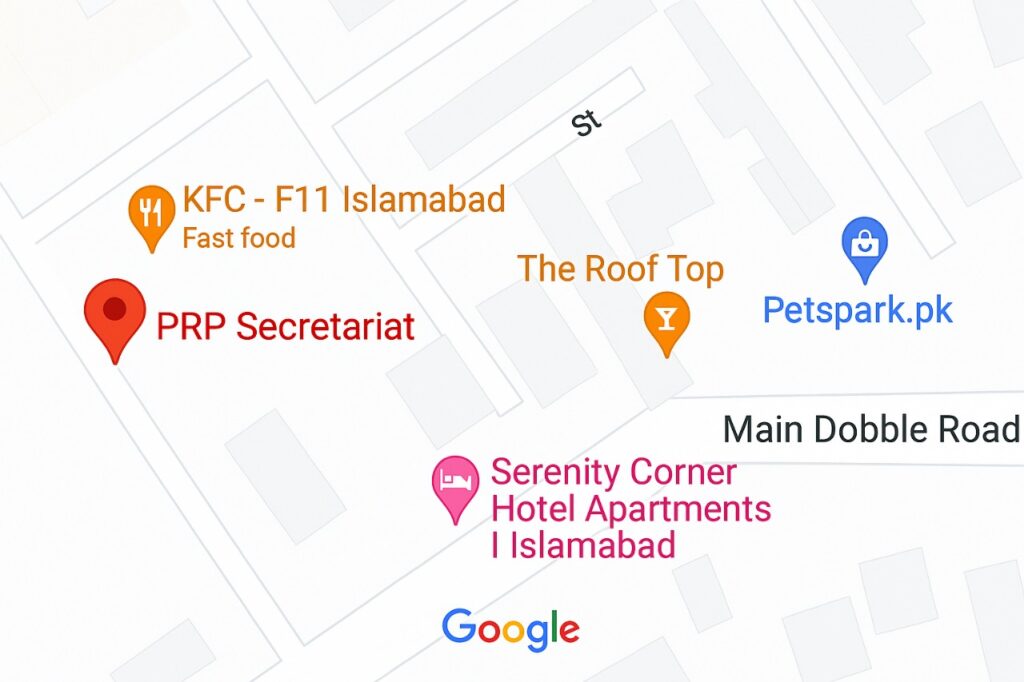
Founded in 1947 , the Pakistan Red Crescent Society (PRCS) stands as the nation’s premier humanitarian organization and a critical auxiliary to government emergency services. Operating under the core principles of humanity, impartiality, and neutrality, the PRCS leads nationwide efforts in disaster relief, crisis response, and community health. With a formidable network of over 1.8 million trained volunteers spanning every district, the organization delivers rapid, on-the-ground assistance ranging from emergency medical aid to essential relief distribution during natural disasters and complex emergencies. Deeply aligned with the mission of promoting resilient preparedness, the PRCS champions proactive disaster risk reduction by spearheading community resilience programs, school safety initiatives, and livelihood support for vulnerable populations. By collaborating closely with national bodies like the NDMA and integrating with the global Red Cross and Red Crescent Movement, the PRCS ensures a coordinated, robust approach to disaster management, empowering communities across Pakistan to effectively prepare for, endure, and overcome severe crises.